
Michael
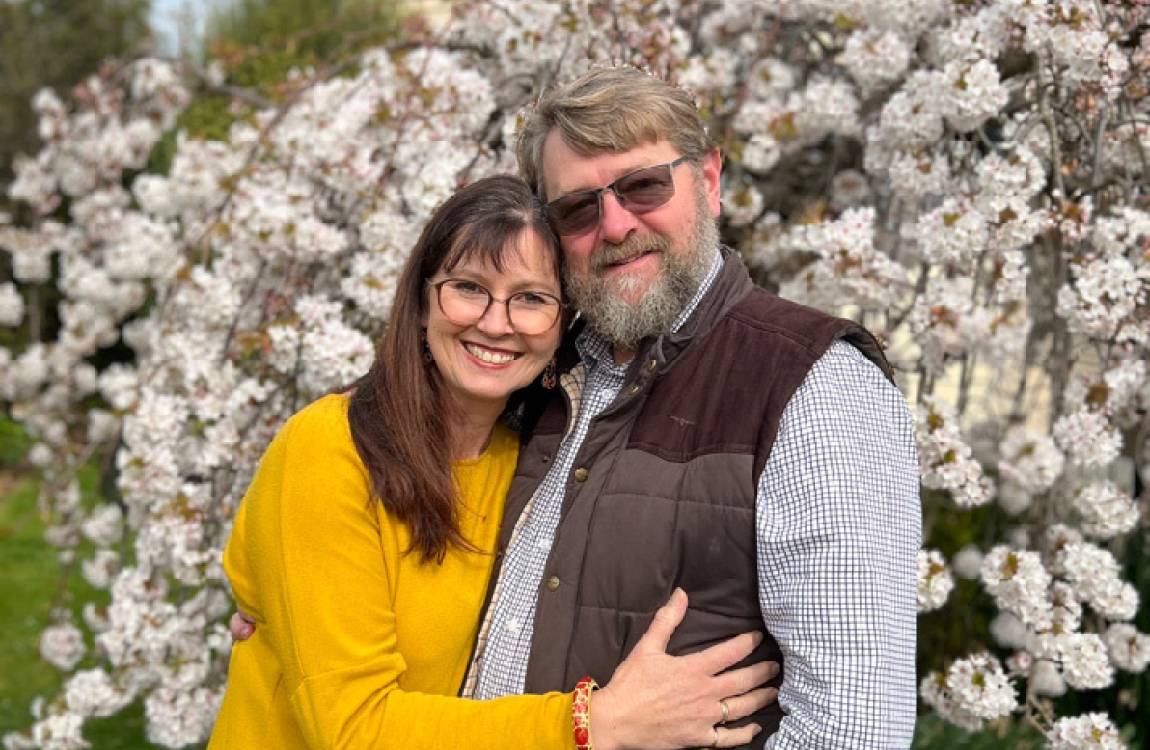
Profile
Michael is a highly innovative, solutions focused practitioner of process design, automation and implementation.
Michael is the founder of Evocra and inventor of the OCRA process. Michael has extensive experience in the remediation of complex cocontaminated waste water streams. Michael is outcomes focused when problem solving client issues, seeking to deliver maximum value through understanding the ‘whole of asset’ challenge.
Michael pursues innovation through research and development with a focus on delivering practical industry solutions. Michael has a strong understanding of the design obligations under AS/NZS Standards. Michael brings these skills together to deliver economic and environmentally superior solutions to otherwise complex issues. Michael has a love of fly fishing.
Experience
Director, Green Shadows, — 2010-2022
CTO, Evocra, — 2015-2022
In 2010 Michael designed the OCRA Process when asked to assess a complex Acid Mine Drainage issue on top of a mountain in a world heritage area on the west coast of Tasmania. The Plant utilising the process was installed in 2011 and the OCRA Process is protected by international Patents.
In 1993 designed a process for human waste treatment certified to AS/NZS 1546.3 and 1546.1. The process was commercialised as the Wet Innovations 2250 and sold in Tasmania, Victoria and Queensland. Commercial implementations of the process were produced and installed in Tasmania and Victoria.
From 1988, Aquarist and Aquacultural systems and components, with a focus on recirculation and tight automation control for public aquaria and aquacultural facilities.
Skills
- Skilled in applied science
- Inventor of the OCRA Process
- Process design and optimisation
- Detailed understanding of chemistry
- Innovation through research and development
Publications
REMOVAL OF HEAVY METALS FROM ACID AND NEUTRAL MINE DRAINAGE VIA OZOFRACTIONATIVE CATALYSED REAGENT ADDITION
D.M. Hunter, B.J. Allen, and M.D. Dickson
10th Australian Workshop on Acid and Metalliferous Drainage “Minimising AMD risk across the mining life cycle” 23 March 2020 Dubbo, New South Wales.
Abstract:
Laboratory trials have been conducted using EVOCRA’s patented Ozofractionative Catalysed Reagent Addition (OCRA) process for removing heavy metals from neutral mine drainage (NMD) and acid mine drainage (AMD) originating from an Australian coal mining operation. The OCRA process utilises ozone and reagent to promote oxidative precipitation of heavy metals via the adjustment of operational parameters pH and Eh. The objective of the study was to determine the required operating conditions for the OCRA process to achieve discharge limits defined by ANZECC for cobalt, iron, manganese, nickel and zinc to 95% species protection levels for freshwater.
In the NMD trial, with a starting pH of 6.6, the OCRA process removed 99.6% of cobalt, 99.7% of iron, 99.3% of manganese, 98.7% of nickel and 99.1% of zinc, achieving all ANZECC 95% protection guidelines. In the AMD trial, with a starting pH of 4.5, 99.9% of cobalt, >96.8% of iron, 99.9% of manganese, 99.3% of nickel and 99.8% of zinc were removed achieving all ANZECC 95% protection guidelines except nickel. The output water pH for the NMD and AMD trials were 7.4 and 6.1 respectively. These results were achieved using the same throughput and operational parameters for both waters demonstrating that the process is robust and capable of treating water with both low and high levels of acidity and heavy metal contamination.
WATER TREATMENT TECHNOLOGIES FOR PFAS: THE NEXT GENERATION
John Horst, Jeff McDonough, Ian Ross, Michael Dickson, Jonathan Miles, Jake Hurst, and Peter Storch
March 2018, Ground Water Monitoring and Remediation Volume 38(3), pages: 13-23.
Patents
METHOD FOR TREATING INDUSTRIAL WASTE
Publication number: 20140190896
Abstract: Disclosed herein is a method for removing contaminants from an industrial fluid waste. The method comprises the steps of ozofractionating the industrial fluid waste, whereby contaminants are oxidised and a foam fractionate is formed; and separating at least a portion of the foam fractionate and any precipitate from the ozofractionated fluid.
Filed: August 3, 2012
Publication date: July 10, 2014
Inventor: Michael David Dickson
SEWAGE TREATMENT METHOD
Publication number: 20220177341
Abstract: Disclosed herein is a method for remediating sewage that contains persistent contaminants. The method comprises ozofractionating the sewage under conditions whereby a foam fractionate comprising persistent contaminants is produced and separated from an ozofractionated wastewater, quiescing the ozofractionated wastewater, whereby a residual ozone content of the ozofractionated wastewater is reduced, and contacting the quiesced ozofractionated wastewater with a microorganism population under conditions effective to biologically remediate the ozofractionated wastewater.
Filed: March 26, 2020
Publication date: June 9, 2022
Inventor: Michael Dickson
DECOMPOSITION OF CHEMICAL SPECIES IN A CONTAMINATED FLUID
Publication number: WO-2018107249-A1
Abstract: Disclosed herein is a method for decomposing chemical species in a contaminated fluid. The method comprises atomising a liquid stream and delivering atomised droplets into an upper portion of a reaction chamber having a pressurised atmosphere comprising a gaseous reactive species, the contaminated fluid being delivered into the reaction chamber with the liquid stream or with the gaseous reactive species; causing a vortex within the reaction chamber, whereby the atomised droplets spiral downwardly, with larger sized atomised droplets tending to move towards sidewalls of the reaction chamber; and collecting atomised droplets which land at a centre of a lower portion of the reaction chamber, the collected droplets providing a treated liquid comprising decomposed chemical species.
Filed: 16/12/2016
Publication date: February 9, 2022
Inventor: Michael David Dickson