
OMASP V1 (1993)
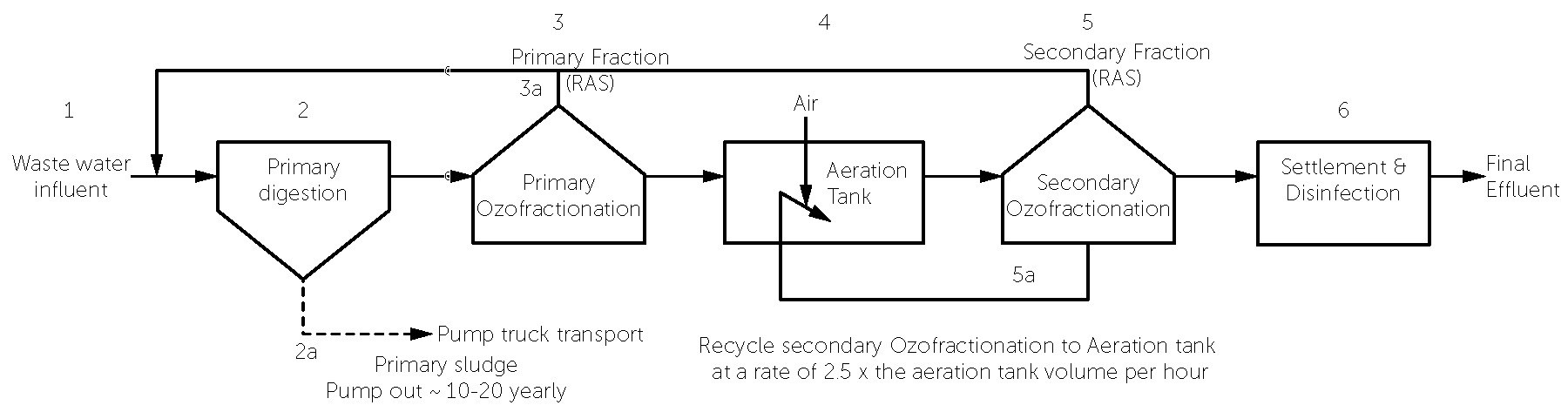
In 1993, a novel process was developed for the onsite treatment of domestic sewage that combined both the AOP and activated sludge recycling processes of an AOP modified municipal WTP with the benefit of ozofractionation and fractionation. Ozofractionation and fractionation’s ability to aggressively oxidise BOD, continually strip TSS from the sewage and effectively recycles sludge back to primary anaerobic digestion for domestic and small rural and industrial facilities enabled the plants to process far higher natural organic matter (NOM) loading than traditional plant processes. This process passed the Australian and New Zealand Standards (1546.1 & 1546.3) for the installation of the domestic models. Figure 8 shows the main stages of the Ozofractionation Modified Activated Sludge Process. (OMASP).
Figure 8 - OMASP Schematic
The increased efficiency of the process was significantly higher than other processes available, such that the capacity of the unit was noted by GHD in their report on the process compliance for AS/NZS 1546.3 where they stated:
“Shock loading (big parties) will not create an issue as the unit will continue to produce effluent within the AS/NZS 1546.3 and AS/NZS 1547:2000 standards, whilst processing BOD levels of up to 835 mg/L and Total Suspended Solids (TSS) levels of up to 4950 mg/L (compared with standard domestic wastewater which has levels for both BOD and SS in the range of 150 – 300 mg/L).”
The OMASP process is capable of treating 1,948 grams of loading for BOD and 11,550 grams of loading for TSS rather than the 700 grams for BOD and TSS usual for a standard 10 Equivalent Person (EP) while still producing the standard for AS/NZS 1546.3 (BOD <20 mg/l, TSS <30 mg/L). OMASP typically produces effluent BOD of >5mg/L and TSS >2mg/L. Additionally OMASP reduced TN and TP by >90%. At over 275% more efficient than traditional processes, OMASP offers significant improvements in treatment for domestic sewerage and allows for smaller footprint and more energy efficient plant deployments.